Welcome, Grace & Peace...

Welcome to my blog, a transdisciplinary place of reflection on creativity, pastoral theology, and psychotherapy. Posts are few, so check back periodically to see what's new. Enjoy!

The Rev. Martha S. Jacobi., PhD, LCSW


5.25.2016

Brainspotting Phase 1 Training in Plainview NY -- July 29-31, 2016

I am pleased to be teaching Brainspotting Phase 1, July 29-31, 2016, on the "campus" of Good Shepherd Lutheran Church & School, 99 Central Park Road, Plainview NY. Trainers Deborah Antinori & Christine Ranck will be assisting. this is the first BSP Phase 1 in the greater NYC area in many years!
Registration is open - online (at www.BrainspottingHappens-marthasjacobi.com - click on "Workshops & Trainings", then the "Registration" tab, & scroll down) -- and offline -- see below.


3.30.2016

Brainspotting in Brazil -- & Paraguay (who goes to Paraguay? -- I do!)

I've recently returned from a most amazing journey to South America!

First stop was in Paraguay to visit with friends Moni & Luis Baumann. Moni is bringing Brainspotting to Paraguay, especially to the children of Ascuncion--they are so lucky & blessed to have her passion & expertise. The Paraguayan visit included an overnight at Luis's mother's home -- a working farm -- in "The Colony," dining on freshly slaughtered sheep, with much sipping of ritual mate, & a tri-lingual dinner conversation!


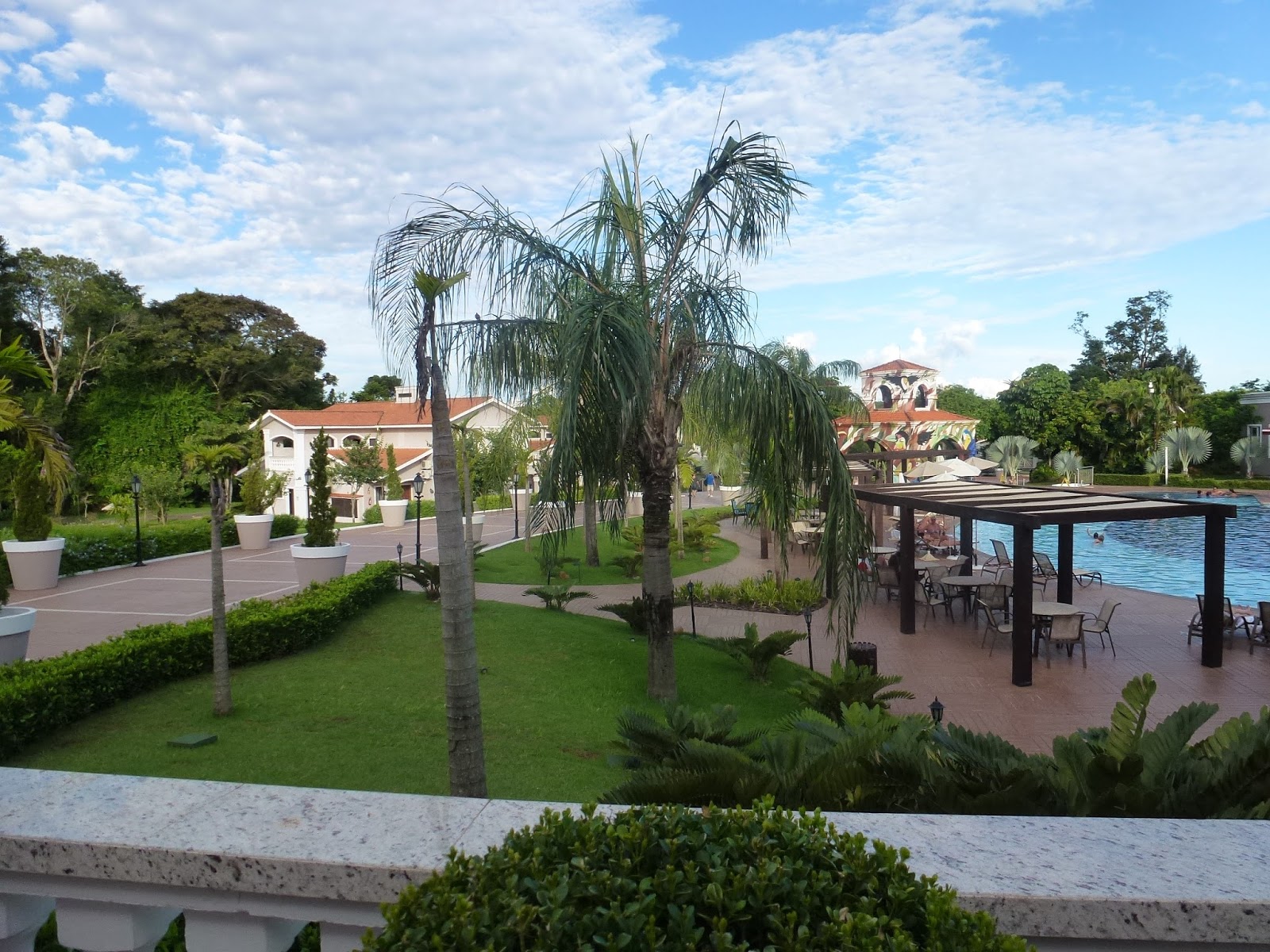
Moni & I then took the bus from Col Oviedo PY to Foz do Iguacu, Brasil for R&R at a "Make a Wish" foundation hotel, & a day trip to the Iguacu Falls -- truly a wonder of the world.  


Two short flights & a long van-transfer to Buzios, Brazil followed -- taking us to the 1st International Brainspotting Conference, at which I was honored to be teaching several workshops. Over 250 Brainspotters from 27 countries attended -- truly inspirational & enriching! -- including time for fun at Geriba Beach in Buzios.


Brazilian Conference Coordinators (L to R) with David Grand:
Esly Carvalho, Patricia Jacob, Cristiane Ramos

Left to Right (below):
David Grand, Martha Jacobi, Moni Baumann & Mark Grixti

Geriba Beach

1st International Brainspotting Conference, Buzios, RJ, Brasil

What remains, post conference?

A deep sense of gratitude for the opportunity - and means - to make this trip; new friends & colleagues; a commitment to improve my written & spoken Portugese & Spanish(!); indelible memories; and a sense of connection, community, & commitment to the work of individual, family, community, & global healing.

11.20.2015

Finally -- Martha has a professional website!

It's been a long time coming -- and a bit of a "learning curve" -- but it's up & running!
Please visit, at:
www.BrainspottingHappens-marthasjacobi.com
or simply, www.marthasjacobi.com

6.08.2015

Relativity & Enduring

Someone accidentally drew my attention today, to the fact that the blog has gone unattended for... a while... nearly four years. Yet it seems a blink-of-the-eye until I stop to reflect on all that has happened, and then again it can still seem a blink-of-the eye. Or maybe one of those "wrinkles" in time...or a quantum leap of some sort...

In the middle, my mom died, my dad's dementia went into high gear~as did various other medical issues he had~my kitty died, one of the new adopted baby kittens died when anesthetized for her spaying, my dad died.... three more new kitties came into my life ~ and a son-in-law...  I could go on...  And that's just the mere microcosm of one woman's life...

So I've been living, not just thinking, about loss. About transiency. About what endures. About life. About death.
About faith.
About hope.
About love.
About reality and illusion.
About relativity and perspective.
About the saving of starfish, one at a time.

In the end, my family therapy teacher, Edwin Friedman, was right: "There are those times in life when all you have is yourself, your Book, and your God." Ed was a rabbi turned psychologist, a somewhat odd, but very wise man. 

If you're very lucky and/or very blessed, you might also have a friend who helps you save the starfish that have washed up on the beach. One.by.One. I am a lucky, blessed woman. Thank you JCC. 
I love you.

8.20.2011

At Long Last

A dance improvisation with my longtime friend and classmate, Marina Gobins Walchli, performed at the 2011 gathering of Interlochen Arts Academy alums, "1969-1972 or so..."   Video by Lawrence Probes.

6.22.2011

30 years and counting...

I realized, yesterday, that my ordination happened on the summer solstace--the "longest day" of the year-- the day with the most sunlight, in the northern hemisphere. My husband & I joked about what manner of metaphoric meaning might be contained therein, as the 30th anniversary of the ordination came...and went...a moment in time...a moment marking the passing of time...a moment representing more than half  of my life-time...

It was a beautiful day in New York: warm, but not too hot, nor humid.  Idyllic. A perfect day.

Minstry, however, is not always like that, on the outside. Yet in a deeper sense, it is... Ministry is about being with others in the contexts of their lives. It is about incarnational embodiment of the Gospel. It is about the unexpected popping up in the midst of the ordinary, the hum-drum, the up-and-down days. It is about bath & meal & conversation: font, table, and pulpit. Ministry is about suffering & joy; consternation & celebration; or, in Frederick Buechner's words, about "Comedy, Tragedy, & Fairy Tale."

Thirty years have come and gone since that summer solstace of 1981; it does not seem possible, most of the time.  And yet, as I think back, I see faces and remember names, across places & spaces... A child baptized, and buried three months later; another child receiving first communion--soon to be, herself, ordained! ("Grace: God's love given freely." --and if she is reading this, she knows who she is.) I remember the single mom struggling with her four children and living in poverty; I remember the retired church-men (yes, men) gathering to talk and do "handyman" work around the church. I remember the work-release programs of the upstate prisons, and the ministry of hospitality of the Ladies' Aid, the Frauen Verein, and the LCW... the forthrightness of GF:  "So, what are you in for?" Inmate: "Manslaughter."  GF:  "Oh. Have some cake?") ...  precious memories, precious times. Thirty years later, new memories are being forged, new relatonships born, nuances of ministry explored...

...like that of having found myself ecclesiastically homeless, in 2004, for reasons far beyond the scope of this blog -- and being welcomed into a new church home, in the city.... St. Luke's, the Lutheran Church near Times Square... first as a member & later, as pastoral associate. Word and Sacrament, there, support and sustain the healing work of pastoral psychotherapy; the practice deepens and enriches the ministry at St. Luke's --  interlocking circles of Word, faith, & grace.

2.23.2011

Creativity Consciousness...

I just finished reading yet another book about providing psychotherapy with trauma survivors. It had some fresh perspectives on conceptualizing the work... but in the end, after all the theory had come and gone, after certain examples sounded technologically "dated" only 4 years after publication(!) -- one sentence stood out for me:  that certain interventions "can be accomplished in a variety of ways, limited only by the creativity of the patient and therapist." (italics, mine)

This is one of the "gutsiest" sentences I've read recently, flying in the face of recipe-like protocols, cost-management of treatment, and what I believe to be an over-dependence on quantitative outcome measures. Creativity -- of both patient and therapist...  I hear the phrase suggesting a collaborative, mutuality of imagination; a foray into the mystical places and workings of the brain, mind, & spirit that I call the "land of no words."  It is where science meets art, inspiration, and the wisdom of the ages. It is also the way I work, as a therapist, a liturgist, a preacher.

Creativity, I think, is both movement and stillness; action and state-of-being. It is both a hallmark and a part of the birthing process of healing. Creativity enters into what now is with possibilities of what else could be. Creativity envisions what is -- and is not -- already there to be seen; the expected and unexpected, the up and the down, the inside and the outside and everything in between... it is the conjurer of paradoxes like the mobius strip, and conundrums of perspective.

Eventually "it" lands in the concrete words and behavior of the therapy room and/or the sanctuary: healing movement in sacred space, and God is present in the mists of mind, in the midst of human meeting.

2.04.2011

Movement in Stillness ~~ Words out of Silence

"When there is too much, there is not enough."   (anon.)

2010 was kind of like that.  Winds of change rippled, and sometimes ripped, through my life, bringing a new life-partner, wedding, and step-children as well as the scourge of bedbugs, an assaultive barrage of jackhammers as my apartment building's facade was "restored," and an acute hip-to-knee injury.  When there is so much movement, a counterpoint of stillness is needed; a silence of word in order for the healing movment deep within to give rise to new words to share.

But now, as turns and jumps return into and out of my dancing, and the chaos of an apartment upended recedes into a new state of order, as solitude and family life become integrated, the joining of word to contemplation, here, begins anew~~with gratitude.

Gratitude, gratefulness, appreciation, thanksgiving... to God and to all those near and far and dear who have given their support, love, prayers, helping hands, joy, laughter, kleenex, new phones, more kleenex, humor, more kleenex, and their hearts.  Not unlike 1990, the year in which I lost my voice and was "listened into" a new one; not unlike 2001 with its September story; 2010 has become another year measuring time into "before" and "after." 

In the "after," there are new roads to travel; new paths to carve out ahead.  There are new dances to learn; there is new space set apart, inside and out.  Today, I own my ambivalence about change, and pray thus, "O God, change is all about us and within us, but in your steadfast love and faithfulness, I will~~and do~~put my trust."  So be it; amen.

9.12.2009

September 12th, "Live, from New York"

It is the day after the day before.

Much was said yesterday, about the new designation of September 11th as "a day of service and remembrance" (or is it the other way around?) -- which is great.  But what about today?  Do we serve and remember for one day only? 

The names and faces of so many wove themselves through  my heart and mind yesterday, and to a greater and lesser extent remain there today.  Some are living and some are not.  Some are healthy and some are not.  Some have become impoverished in the last eight years; some have not.  Some have left New York; most have not.  It is their home. 

And that is why I think September 12 needs to be held up as image and metaphor, not just of life "going on," but of how life goes on; of how we treat one another--how we respond to human sorrow, need, and pain.  In 2001, the subways began to run back into Manhattan again on September 12th.  I was on one of them.  It was the day when volunteers, not just first responders, were able make their way downtown, and uptown, and wherever they were needed.  Sometimes there was nothing to do, but just "be" with the eye-witnesses of the day before.  Sometimes, it was just about being together, supporting one another in comprehending what had happened.  Sometimes there were tasks to be done; recovery workers to support; sorrows to be held and griefs to be borne. 

Eight years have passed, and though September 11, 2009 was quite different that its counterpart of 2001, September 12th is much the same -- except for all the construction on the subways, and their failure to run anything close to normally today, and the appalling lack adequate money to help the suffering survivors.  Still we remember, lives lost and found; still we serve, because there is need.

It is always, now, the day after the day before.

Link to photos of Tribute in Light

8.23.2009

Body, Brain, & Spirit


"The brain is part of the body."
I don't know who said it first; I think I heard it first from Francine Shapiro, at the 2003 conference of the EMDR International Association, in Denver. It was a moment that has stayed with me, and is ever present these days as I am developing my thesis proposal for a second level theological degree.

"The brain mediates...everything."
I don't know where I first heard or read that, either--but it is profound, and leaves me pondering more questions than responses to them. If the brain mediates "everything," how does the brain mediate the Spirit / spirit? How does the brain mediate God? What does one make of, in James' words, "the varieties of religious experience"? And what of the rest of the body in religio-spiritual experience? In Brainspotting with clients their "felt-sense" of religio-spiritual experience, that "felt-sense" is noticed, most often, somewhere below the neck--but not always... yet the phenomena of the experiencing itself is brain-centered.

"The human brain was not designed for the demands of 21st century urban life."
I read that recently, or something like it, in a couple of different places. I am not sure if I agree or disagree. While I have a visceral desire to agree wholeheartedly--I also feel a pull back from doing so. The brain's ability to adapt, to accomodate, to change, to grow, to heal--is phenomenal, as is that of the whole human body, and indeed the whole creation. (That said: I do not believe that the human brain was designed to meet the demands of hyper-excessive sensory stimulation, nor the concussive effects of explosions such as those experienced by far too many Iraq war veterans. If anyone doubts the effects of vibrational energy, here they are, in most negative form.)

So what about creation theology... and the need to hold together creation (& covenant & renewal) and redemption? In our "transitional eschatologies" (S. Mark Heim, A Trinitarian Theology of Religious Ends) what does care and repair of the physical aspects of creation look like? What recognition of ultimate versus penultimate healing and wholeness needs to be acknowleged? Yet however we define it, describe it -- it's all still mediated by the brain, which itself is part of that creation...

Where I'm going with this, what I want to explore, think, and write about--one day--is a theology of the brain. That's way "too big" for the current academic exercise, of course... but it's what's driving it. Brain and its relation to body, and the relation of both to God, and vice versa-- through that wonderful Lutheran Confessional Theological lens, which can do no other than root it all,sooner or later, in grace.

For now, I'll keep reading, exploring, learning, thinking.... and maybe write some of those thoughts here in the future.


3.20.2009

Interlochen memories

I recently wrote a paper on an obscure phrase in the Smalcald Articles (Martin Luther's "theological last will and testament"): "the mutual conversation and consolation of the brothers and sisters" as a means by which the gospel is communicated. In the paper, I reflected on the paradox of contemporary technologies that bring people together -- and simultaneously let them remain apart.

When I wrote the paper, I was thinking, in particular, of Facebook, where there is now a rightfully "closed" group for people who attended the Interlochen Arts Academy c. 1969-1972, plus or minus. It is a remarkable group; remarkable when we were young & remarkable at the "certain ages" we all are now. Some in the group I first met as a summer camper, when I was 9 or 10 years old; others were met in high school. Some are my brother's friends. Yet Interlochen is a bond we all share; stories & confessions abound there; celebrations of life -- and also mourning of peers and former teachers. And of course the requisite: "what are you doing now?" and "does anyone know whatever happened to ________?"

The Facebook group is filled with nostalgia; with remembrances of times past... The "discussion board" brings us together in a particular state of mind: the children, the artists, the students, the performers we once were, together in the "land of the stately pines..." until news of a death is reported... "long illness" ... "AIDS, early in the epidemic" ... "unknown causes" ... And the fragility of life becomes present as the brief moments in real time when our lives intersected, fade into the reality of lives as they are now, as we are now.

Interlochen is in my blood. It was there that creativity and spirituality found each other in my life. There, that the dancer, sitting on the steps heading down to the Minnesota building, heard again the vocational call to ministry first sensed eight years earlier. "Who me?? Girls can't be pastors." Little did I know as I re-sensed that call, the Lutheran Church in America had just ordained Beth Platz. Much less could I know, eight years later that same church would ordain me.

Facebook has awakened roots and nearly lifelong friendships I thought were gone forever. But are they real or virtual? Or virtually real? Perhaps only a face-to-face reunion can answer those questions. Until then, I cherish the memories of "the way we were" and enjoy the maturity of who we all are now. It might not be exactly what Luther was talking about--but buried within those discussion boards, to me, there is grace.

"Sound the call...."

"God of the lakes..."

"Dedicated to the promotion of world friendship through the universal language of the arts."

12.10.2008

Advent musings

I like Advent. I like its liturgical color, blue. I like the extra candles, the sense of movement in the church year binding first and last things, endings and beginnings, creation and recreation, incarnation and redemption, story and promise, repentance and hope, sin and grace.

I liked Advent as a child, back when the color was purple. Though I surely did not understand why Advent felt the way it did, I had dutifully learned that Advent means "coming, " and that Jesus was coming. The expectancy of his coming was palpable, at church and at home, despite the competition from St. Nick.

A bit of age has brought me a deep appreciation for the simple complexity of the season. Historically, it's a season of waiting, watching, preparation, penance, and prayer -- all somewhat somber -- but hidden within it, on the 3rd of its 4 Sundays, the color is PINK! And the theme of the day is JOY! "Rejoice, O daughter of Jerusalem! Behold your sovereign comes to you..." Already, and not yet.

It's not unlike the therapeutic process. There's a lot of waiting that goes on in it: waiting for clients' timing and readiness, waiting to see "what happens next." Waiting and watching, staying attentive and attuned to clients' deepest sorrows and pain, terrors and rage. Waiting and watching, as their healing process works deep within, with "sighs too deep for words." Waiting and watching, sometimes week after week, even year after year, waiting for the pink to emerge, living in hope for the freedom of the already-and-not-yet healing being wrought, deep within.

And I realize the extent to which EMDR and Brainspotting have taught me how to wait and watch, with patience and curiosity, with humility and steadfastness, whether in the therapy room, or in life. To wait and watch for "what comes next," to receive it for what it is, in open expectancy for all that is to come.

I like Advent.

"Rejoice! Rejoice! Emmanuel has come to you..."

11.20.2008

EMDR Solutions II & Marginality

Robin, the editor, says the book is on its way to final editing and should be available early in 2009. It will be a tome. My chapter is last, chapter 26: Using EMDR with religious and spiritually attuned clients. It is my initial written effort to help secular therapists find their way in working with such clients, presented from the dual perspective of being both a clergyperson and a clinician. I say "dual perspective" but marginal is probably the better description.

The ELCA doesn't quite know what to do with the handful of pastors like me, whose ministries are by nature integrative and incarnational, and may or may not take place in a congregational setting. Nor do many secular psychotherapy colleagues. ("You're a what?") Are we "neither fish nor fowl"? Or both "fish" and "fowl" (hopefully not foul). However defined, we live and work in the intersection of two professions. We live and work, sometimes, on a single point of intersection; other times, in a nearly global sphere thereof. We work with those who share our faith and those who don't, and those who claim no faith life at all. And we work with those whose faith has been wounded by both religion and the living of life.

Yet when all is said and done, when churchly institutions and state departments of the professions have each made their case, for me, it is Christ who grounds and models this lifework (vocation) and ministry. Christ--fully God and fully human--engaged in salvific healing for all. ("Salvation" and "Healing" having the same Greek root.) Christ--who comes to live within my very human life, not some ethereal "spook" but in my very flesh and blood, my human-beingness. Christ--whose ministry with the poor and outcast placed him in the dual perspective of voluntary marginality out of which grace flowed.

Likewise, in the dual perspective and voluntary marginality of pastoral psychotherapy, grace-moments "happen" when a particular type of listening hears clients' religio-spiritual joys, sorrows, and themes in the cares and concerns of their lives. It is a listening-into-grace that becomes healing movement in a sacred space.

10.20.2008

Brainspotting and the Bishop's Installation

We have (another) new bishop in the Metropolitan New York Synod of the ELCA. He was installed in October, at Manhattan's Central Synagogue -- yes, Synagogue. It is a beautiful and inspiring worship space; the Rabbi apparently has a good and close relationship with a number of Lutheran clergy in Midtown--most notably, Pr. Derr at St. Peter's. Remarkably, the synagogue permitted us Lutherans to hallow the space for Christian worship, including celebration of the Eucharist. Even more remarkably, one of my colleagues remembered that I have a background in dance, including liturgical dance...and with much ambivalence, I agreed to participate.

It was kind of a last minute thing...I wasn't sure until a week before that I'd even be available. There was only one time to see the space, feel the space, grasp the flow of the liturgy and endeavor to get inside the thinking of the worship planners who thought that having dance would be a good idea. A concept & choreography evolved--acknowledging the Ark and the prophetic word of God's salvation, turning and "delivering it" to the people gathered, movement to hallow the space with the sign of the Cross, movement noting the pulpit and brought-in-for-the-occasion-water-bowl for the font, setting of the table, filling the font, and a joyous call to worship, danced in procession.

The catch being -- I hadn't performed anywhere in 5 years; and hadn't done liturgical dance in a good while longer; age has begun to catch up with various parts of my body. I had performance anxiety. What to do? Brainspotting to the rescue.

Brainspotting, a therapeutic modality that bridges the psychological and emotional/physiological, can be used to process trauma and other distresses of life, for strengthening of internal resources, and/or to quell anxiety and enhance performance and creativity. In Brainspotting, a bodily, felt sense of activation is connected with a particular eye position and focus, and processing unfolds from there. Dr. David Grand, its developer, is my mentor, and he has taught me well. He encourages my creativity as a therapist, with Brainspotting -- and without it.

Back at the Bishop's installation. . . "Spirit-spotting" began. I "went inside" myself, to pray, and to ascertain my felt sense of the Holy Spirit within, the Source of all creativity. The felt sense was in the crown of my head, my shoulders, and my breath. Incarnational spiritual resources. I found the eye position that maximized the felt sense of the Spirit, and at once, my heart palpitations released, my breathing became deeper and slower, and I felt a reassuring groundedness. Out into the "chancel" I went, consecrating space, table, pulpit and font in movement. . . then into the center aisle, for the processional. Halfway up the aisle, my eyes made contact with those of Sharon Wilson, a faithful laywoman who works tirelessly for healing for women, especially those who have been abused at home. She was beaming. And I relaxed into the joy of healing movement in that sacred space. I remembered why I so love to dance. Dance is freedom, liberation; full-body worship. It is also hard work, requiring discipline and constant training. And flexibility -- of body and mind.

Flexibility, when the organ improvisation usurps the best-conceived choreographic plan--and calls forth improvisation, or extemporaneous, movement. Sometimes, such flexibility is just plain fun.

The Bishop was installed; the juice and cheese reception was "lovely" in the Citigroup Atrium. And I danced, in spirit, all the way home.

3.23.2008

Easter

It was a recent-history attendance record at my church today~~101 worshippers~~of whom almost 10% have movement difficulties and need to use canes, a challenge for them and for the architecture of the church.

Older church buildings may be exempt from accessibility builing-code legislation, but not from theological assessment. "Stairs everywhere" in churches are, frankly, exclusive when there is no other means of access to the space. Church buildings need to be able to be accessed by all--not only the sanctuary of the worship space, but the educational and social spaces as well. How sad that accessibilty is not a priority in so many congregations. Yes, it will be expensive. No it is often not convenient and may change both the exterior & interior landscape. But when I watch the members of my church, valiantly willing themselves to ascend the many stairs into the sancturay... and know that their days are numbered to be able to do so...I know that accessibility is ultimately, about grace. Costly grace, but grace nonetheless. Accessibility to sacred space is a mirror of God's love. It is a concrete expression of a congregation's welcome and an extension of the graciousness of Christ.